Most flowerhorns are best housed alone. A fish being large, armored or aggressive does not make it a safe companion. The ten fish commonly suggested below are compatibility risks to assess, not a shopping list for one aquarium.
Garage Aquatics reports keeping its flowerhorns individually. A single-fish aquarium can still provide swimming space, sheltered areas and an accessible layout for feeding and maintenance. Review the flowerhorn care guide before considering companions.
What a mixed setup would require
It needs substantially more territory than a single adult’s aquarium, secure visual barriers and an established alternative tank large enough for any fish removed. There is no gallon threshold that guarantees safety. Quarantine additions separately and observe behavior as fish mature, not only during their first few days together.
Separate fish if one cannot eat, is pinned behind equipment, suffers injuries or is chased repeatedly. Do not regard torn fins as an acceptable price of keeping aggressive cichlids. A divider must be secure and prevent biting through or around it.
1. Midas cichlid: another powerful territorial fish

Amphilophus citrinellus is not made compatible by possible shared ancestry with a flowerhorn. Two large territorial fish can injure one another, and breeding attempts add further risk. Similar water requirements address only one part of compatibility.
2. Green terror: identify the fish and compare temperatures

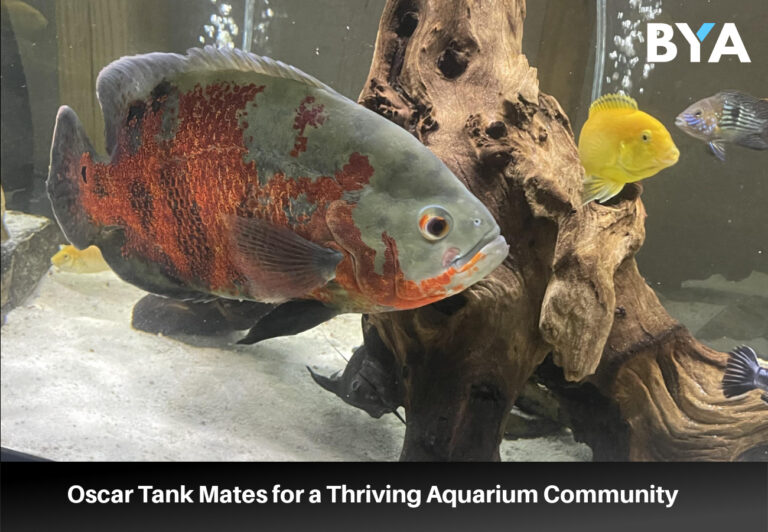
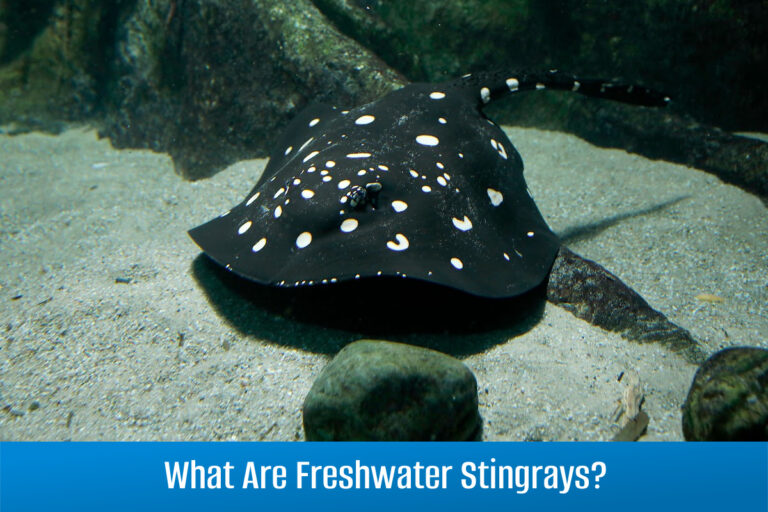
The image above shows a pearl-spotted Texas-type cichlid and should not be used to identify a green terror. Compare the separate blue Texas guide. True green terrors are Andinoacara rivulatus, a different fish.
Their species profile gives a cooler 20–24°C care range. Do not select companions by matching their colors while ignoring the intended water temperature. Territorial conflict remains a separate problem.
3. Red terror: a specialist large-cichlid project
The true red terror, Mesoheros festae, can become very large and aggressively territorial. Its species profile recommends a 210 × 60 cm aquarium base. That is not permission to add a flowerhorn to the same footprint. Avoid pairing them as a routine community experiment.
4. Oscar: size does not prevent bullying

An oscar can be seriously harassed by a flowerhorn despite its substantial size. Missing meals, hiding and damaged fins are signs to separate them. Both also produce considerable waste, so filtration does not remove the need for ample space and water changes.
5. Jaguar cichlid: two potential attackers

Parachromis managuensis is a large predator with its own territorial needs. Matching “aggressive” labels does not establish balance; either fish may become dominant and injure the other. Juvenile coexistence does not predict adult compatibility.
6. Arowana: species and adult footprint matter

Arowanas differ greatly by species, and many need very large, wide aquariums with secure covers. A flowerhorn may attack their flanks or fins. Do not choose one as a surface-dwelling distraction for an aggressive cichlid.
7. Bichir: scales do not protect every body part

Bichirs need their own adult footprint, access to the surface and direct feeding. Fins, eyes and other tissues remain vulnerable to repeated attacks. A quiet bottom-dweller is not automatically safe beneath a territorial flowerhorn.
8. Silver dollars: a shoal needs room to live

Silver dollars need a species-appropriate group and long swimming space. Constantly fleeing a cichlid is not normal social activity. Identify the species; larger relatives such as pacu create a very different adult-size problem.
9. Tinfoil barbs: fast does not mean invulnerable

Barbonymus schwanefeldii grows large and needs a substantial group aquarium. Flashing scales and speed do not guarantee protection from a flowerhorn. Its own lifelong space requirement rules it out as a convenient addition to a typical single-cichlid tank.
10. Spiny eels: a poor default companion
Spiny eels vary from relatively small species to very large fire eels. Their sheltered feeding habits can leave them outcompeted, and they are vulnerable to harassment and injury. Do not assume that being nocturnal lets an eel avoid a flowerhorn’s territory.
If the goal is a stable aquarium rather than an ongoing separation problem, keep the flowerhorn on its own and house the other fish in an aquarium planned around their needs.