German blue rams (Mikrogeophagus ramirezi) need warm, clean water and enough floor space to defend a territory without cornering other fish. Many familiar community species prefer cooler water, so peaceful temperament alone does not make them suitable companions.
Begin with the ram care guide and choose an appropriate stable temperature for your stock. The ten commonly suggested options below need different levels of caution. Do not combine them all in a small aquarium.
1. Celestial pearl danios: usually a poor temperature match

Celestial pearl danios generally favor cooler conditions than blue rams. Their small size and quiet behavior do not resolve that mismatch. Choose a companion with a genuine long-term temperature overlap instead of holding the danios too warm.
2. Apistogramma: competing territories

These are several species, not one interchangeable dwarf cichlid. Identify the exact fish and its temperature and chemistry needs. Both apistos and rams can defend breeding space, making a mixed pair setup a more complicated project. A tank just over 20 gallons is not automatic permission to combine them.
3. Killifish: identity first

Killifish vary greatly in adult size, temperature needs, lifespan and behavior. Some are unsuitable for the warmth rams require or may compete strongly at meals. Assess a named species rather than accepting “killifish” as a compatibility recommendation. Provide a secure cover for jumping species.
4. Bettas: a risky default

Territorial behavior and feeding competition can occur even when the fish use different parts of the aquarium. Neither a female betta nor a different color guarantees compatibility. A group of female bettas adds further social risk and is not an easier alternative to one male.
5. Gold tetras: check maintained temperature

Hemigrammus rodwayi is a generally peaceful group fish. Its reference temperature range is 24–28°C, so it is more plausible where the actual ram conditions overlap than in a tank held permanently at 30°C. Confirm the stock’s requirements and leave room for a proper group.
6. Rummy-nose tetras: one candidate to investigate

Identify the Petitella species being sold and compare its requirements using the rummy-nose care guide. Keep an adequate group in a mature aquarium and ensure that their quick feeding does not leave the rams hungry. Color changes can indicate stress, but cannot replace water tests.
7. Kuhli loaches: often too cool a preference

Many traded banded kuhlis are Pangio semicincta, rather than true P. kuhlii. Check the exact species and suitable temperature: the kuhli guide does not justify keeping them at the top of a ram’s temperature range. They also need a group and direct bottom feeding.
8. Gold barbs: do not recommend for a hot ram tank

The gold barb reference lists 16–24°C. That is a poor routine match for blue rams. Their attractive color and hardiness are not reasons to force a warmer community arrangement.
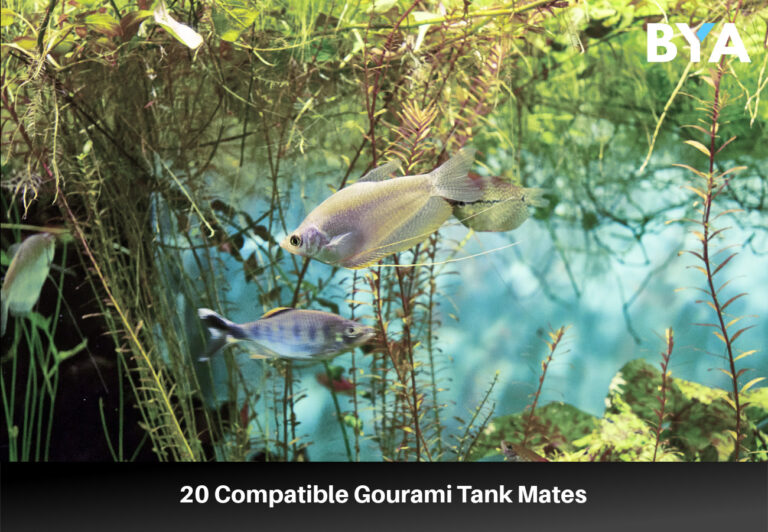
9. Dwarf gouramis: behavior and temperature both matter
Dwarf gouramis can be territorial or become intimidated themselves. Many are kept cooler than a warm ram setup, and other small gouramis have different needs again. Do not treat honey, sparkling and chocolate gouramis as interchangeable companions.
10. Otocinclus: a mature tank is not enough

Otocinclus need established grazing and appropriate direct food, but temperature is another constraint. Many commonly traded species are unsuitable for prolonged high ram temperatures. Consult the oto care guide and identify stock before adding a supposed cleanup crew.
Build a shorter, better-matched stocking list
A properly housed group of cardinal tetras is another option to assess where temperature and chemistry overlap. Check individual size and feeding, and allow the tetra group’s swimming space in addition to ram territory. Keeping the rams without other species is also a valid choice, especially for breeding.
Quarantine additions and monitor meals, refuge use and spawning behavior. A previously peaceful pair may begin chasing neighbors when eggs appear. Keep a separation option and change an unsuccessful arrangement before fish lose condition or develop injuries.